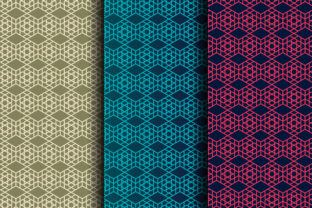
The Hexagon Pattern: A Versatile Design Element in Modern Visual Communication
The hexagon pattern, with its unique geometric structure and inherent symmetry, has emerged as a powerful design element across various industries. This pattern, composed of six equilateral triangles arranged around a central point, offers a blend of simplicity and complexity that makes it ideal for both minimalist and dynamic applications. Whether used in digital design or physical media, the hexagon pattern provides a versatile foundation for creating visually engaging content.
Understanding the Hexagon Pattern
The hexagon is one of the most efficient shapes in geometry, known for its ability to tessellate seamlessly without gaps or overlaps. This property makes it an excellent choice for background patterns, textures, and decorative elements. The hexagon pattern is often associated with modern design trends due to its clean lines and structured form.
In visual design, the hexagon pattern can be implemented in multiple formats, including vector graphics, flat illustrations, and abstract compositions. Its adaptability allows designers to incorporate it into a wide range of projects, from corporate branding to artistic expressions. The use of color, gradient, and line variation further enhances the versatility of this pattern.
Applications of the Hexagon Pattern in Design
The hexagon pattern finds application in diverse fields, making it a valuable asset for designers and creators. In graphic design, it is commonly used as a backdrop or background element to add depth and interest to layouts. For instance, a hexagon-based wallpaper can serve as a subtle yet impactful design feature in digital interfaces or print materials.
Within the realm of branding, the hexagon pattern can be integrated into logos, identity systems, and promotional materials. Its geometric nature aligns well with corporate and business-oriented designs, offering a modern and professional aesthetic. Companies in the fashion, textile, and technology sectors have increasingly adopted hexagon motifs to reflect innovation and creativity.
In the world of illustration, the hexagon pattern can be transformed into abstract art pieces or decorative elements. Artists often use hexagons as a base for intricate compositions, combining them with other geometric shapes and textures to create visually compelling works. This approach is particularly popular in contemporary art and digital illustration.
Hexagon Pattern in Digital and Print Media
The rise of digital media has expanded the use of the hexagon pattern beyond traditional print formats. Online platforms such as websites, social media, and mobile apps frequently incorporate hexagon-based designs to enhance user experience and visual appeal. For example, a hexagon grid layout can be used in data visualization, interactive infographics, or UI components.
In print media, the hexagon pattern is utilized in brochures, posters, and business cards. Its structured form adds a sense of order and professionalism to printed materials. Additionally, the pattern can be combined with other design elements such as stripes, gradients, and halftone effects to create more complex and layered visuals.
When designing for textiles and fabric, the hexagon pattern offers a unique opportunity to create repeatable and scalable designs. These patterns are often used in fashion collections, home décor items, and craft projects. The repetitive nature of the hexagon allows for seamless tiling, making it ideal for wallpaper, fabric prints, and decorative tiles.
Designing with Hexagon Patterns: Key Considerations
Creating effective hexagon-based designs requires careful planning and attention to detail. One of the primary considerations is the balance between simplicity and complexity. While the hexagon pattern itself is straightforward, incorporating additional elements such as color, texture, and typography can significantly impact the overall design.
Another important factor is the context in which the pattern will be used. For instance, a minimalist design may benefit from a single-color hexagon pattern, while a more dynamic layout might require a gradient or multi-colored version. The choice of colors should also align with the intended purpose and audience of the design.
Additionally, designers must consider the scalability of the hexagon pattern. Since it is often used in large-scale applications such as wallpapers or background images, ensuring that the pattern remains clear and legible at different sizes is crucial. Vector formats are particularly useful in this regard, as they maintain quality regardless of scaling.
Hexagon Pattern in Creative Industries
The creative industries have embraced the hexagon pattern as a key component in their design workflows. In the field of illustration, artists use hexagonal grids to organize elements within a composition, creating a sense of structure and harmony. This technique is especially common in abstract and geometric art forms.
For educators and researchers, the hexagon pattern serves as a visual tool for teaching geometry, spatial reasoning, and design principles. Its regular shape and predictable structure make it an excellent resource for educational materials, interactive learning modules, and classroom activities.
Business owners and entrepreneurs also leverage the hexagon pattern in their marketing strategies. From website backgrounds to product packaging, the pattern adds a modern and sophisticated touch to brand identities. It is particularly effective in industries that emphasize innovation, technology, and forward-thinking design.
Hexagon Pattern in Future Design Trends
As design trends continue to evolve, the hexagon pattern is expected to play an even greater role in shaping visual communication. With the increasing focus on minimalism and geometric aesthetics, the hexagon's clean lines and structured form are likely to remain relevant in both digital and physical design spaces.
Moreover, the integration of hexagon patterns with emerging technologies such as augmented reality (AR) and virtual reality (VR) presents exciting opportunities for designers. These patterns can be used to create immersive environments, interactive experiences, and dynamic visual elements that engage users in new and innovative ways.
Looking ahead, the hexagon pattern is poised to become a staple in the design community, offering endless possibilities for creativity, functionality, and visual impact. Whether used in corporate branding, artistic expression, or educational resources, its adaptability ensures that it will continue to be a valuable design element for years to come.