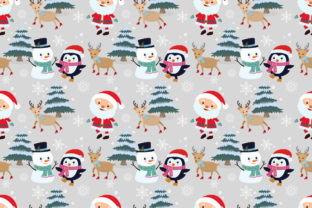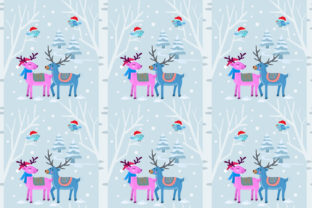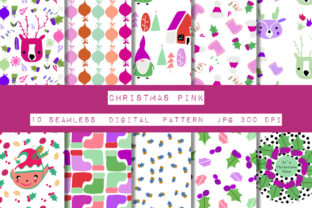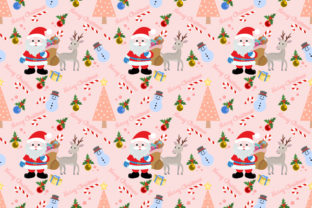
Santa Claus Deer Snowman Ball and Tree
This seamless pattern brings together four iconic winter motifs—Santa Claus, a graceful deer, a cheerful snowman, and a decorated Christmas tree—arranged in balanced, rhythmic repetition. It’s not just festive; it’s intentionally designed for versatility. Each element is stylized with clean outlines, subtle texture, and harmonious color contrast—warm reds and forest greens against crisp whites and soft greys—making it legible at any scale and adaptable across media.
Why This Pattern Works Across Projects
Unlike single-illustration assets, this seamless design eliminates visible seams or awkward repeats when tiled. That means no manual editing to hide edges—just drop it in and scale confidently. The 5000 × 5000 px JPG delivers high-resolution clarity for large-format prints like backdrops or fabric yardage, while the EPS 8 vector file preserves sharpness and editability in Affinity Designer, Adobe Illustrator, or other professional vector tools.
Its balanced composition avoids visual overload: Santa anchors the scene with friendly authority, the deer adds elegance and motion, the snowman offers approachable charm, and the tree grounds the motif with structure and tradition. Together, they form a cohesive narrative—not random holiday clipart, but a unified visual language that reads clearly whether viewed from across a room or on a smartphone screen.
Creative Uses You Can Start Today
Designers and small business owners are already applying this pattern in ways that go beyond seasonal cliché:
- Fabric & Textiles: Print on cotton canvas for holiday aprons, table linens, or quilt backing—ideal for craft fairs or Etsy shops. Because the repeat is tight and centered, even narrow-width fabrics (like 44” cuts) maintain rhythm without awkward cropping.
- Gift Wrapping & Packaging: Use the JPG to create custom wrapping paper PDFs (300 DPI, bleed included), or print directly onto kraft paper with white ink for contrast. Pair with minimalist tags and twine for a premium unboxing experience.
- Wallpaper & Interiors: Apply digitally to accent walls in cafes, classrooms, or boutique retail spaces. Test a 2’ × 2’ sample first—the scale holds up well at both intimate and architectural sizes.
- Digital Backdrops: Import the EPS into Zoom or Teams as a virtual background (using green-screen software or native blur features). The consistent spacing prevents distortion during movement.
- Educational Materials: Teachers use cropped sections as themed borders for worksheets, classroom posters, or digital storyboards—especially effective for early literacy units on seasons or community helpers (Santa as symbol, deer as wildlife, snowman as weather science).
Tailoring the Pattern for Your Audience
Who you’re designing for determines how you adapt the asset—not just what you make, but how you refine it.
For marketers and bloggers: Extract individual elements (using the EPS layers or clipping masks in Illustrator) to build branded social graphics—e.g., pair the deer silhouette with a “New Year Reset” headline, or use the snowman as a playful bullet point icon in an email campaign. Keep text overlays bold and high-contrast; the pattern’s mid-tone background ensures readability.
For educators and nonprofits: Convert sections into printable flashcards or matching games (Santa + sleigh, deer + antlers, etc.). Use the JPG at 50% opacity as a subtle background behind lesson plans—adds thematic warmth without competing with content.
For product-based creators: If you sell handmade ornaments or wooden toys, apply the pattern to packaging inserts or thank-you cards. Consider reversing colors (white elements on deep navy) for a modern twist that stands out on crowded shelves or Instagram feeds.
Staying Consistent Without Sacrificing Originality
Using a ready-made pattern doesn’t mean losing your voice—it means working smarter. Here’s how to keep output intentional:
- Anchor with one dominant element. If your brand leans rustic, emphasize the deer and tree; if playful, highlight the snowman and Santa’s hat. Crop or mask selectively rather than using the full repeat every time.
- Control color context. The base palette is flexible. In Illustrator, recolor the EPS using global swatches—swap forest green for terracotta to align with a fall launch, or desaturate to 70% for a vintage postcard effect.
- Combine thoughtfully. Layer the pattern under hand-lettered quotes or over photography—but never stack multiple busy patterns. Let this be the sole textured layer in your composition.
- Respect scale hierarchy. On apparel, use the full repeat for jackets or tote bags; shrink to 30–40% scale for pocket details or cuff accents. On web, limit tile size to 200–400 px width for subtle background texture.
Realistic Tips for First-Time Users
If you’re new to seamless patterns or vector files, start simple:
- Open the EPS in Illustrator, then use Object > Ungroup to isolate each motif. Save individual SVGs for web use or social avatars.
- In Affinity Designer, place the JPG, then use Document > Resize Canvas to adjust tile dimensions before exporting for fabric printers (they often require specific DPI and bleed settings—check their guidelines first).
- Need a quick mockup? Drag the JPG into a free tool like Photopea or Canva, set blending mode to Multiply, and overlay solid-color shapes to preview how it interacts with branding.
- For physical products: Order a small test print (e.g., 8” × 10”) before committing to yards of fabric or wallpaper rolls. Ink behavior varies by substrate—what looks rich on screen may soften on linen or matte paper.
This isn’t just another holiday download. It’s a foundational asset—one that saves time, supports thoughtful execution, and scales with your goals. Whether you’re prototyping a new product line, refreshing a client’s seasonal campaign, or crafting something meaningful for your classroom or community, the Santa Claus Deer Snowman Ball and Tree pattern gives you structure without constraint. Use it as-is, reinterpret it deliberately, or let it spark an idea that has nothing to do with Christmas at all—because strong visual systems always begin with clarity, not clutter.